Attic Mold Removal in Wilmington, NC
Attic mold tends to announce itself by accident. You climb up for the holiday decorations or a box of old photos, shine a flashlight at the underside of the roof, and the decking is dark with staining that was not there the last time you looked. Or a home inspector flags it a week before closing. Either way, the first question is not how to scrub it. It is where the moisture is coming from, because in Wilmington attics the answer is almost always one of three things, and removing the growth without fixing that cause just books the same job again for next year.
The Three Causes Behind Most Attic Mold
Slow Roof Leaks
A small leak around flashing, a vent boot or a lifted shingle can wet the same patch of decking for months. The wood never fully dries between rains, and by the time a stain shows on the ceiling below, the growth above it is well established.
Bathroom Fans Venting Into the Attic
It is surprisingly common for a bathroom fan duct to end in the attic instead of running outside. Every shower then pumps a load of warm, wet air straight onto the roof decking, right where it condenses. The mold pattern gives it away, growing thickest near the end of the duct.
Blocked or Missing Ventilation
An attic needs air moving through it. When insulation is pushed over the soffit vents, or there are no baffles to keep an airflow channel open, moist air from the house below rises in and sits there. The result is a broad, even film of growth rather than one patch under a leak.
What Attic Mold Looks Like
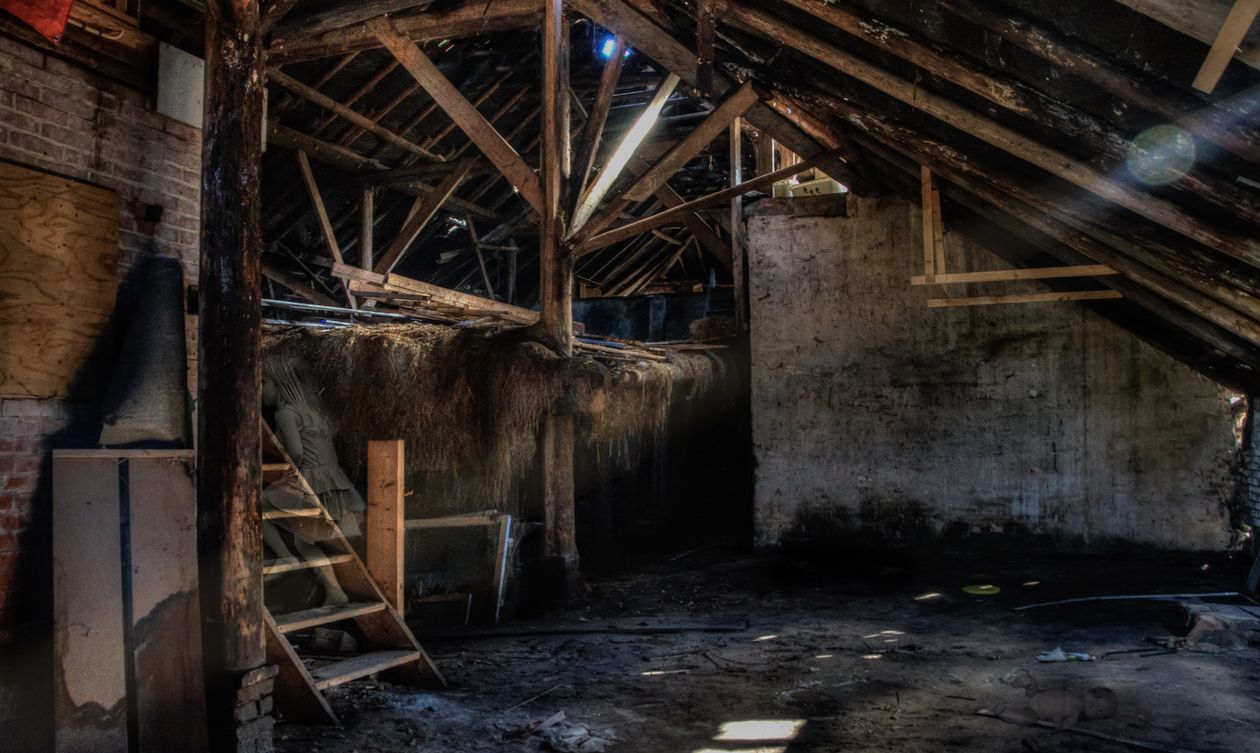
Most people spot it as staining first. The underside of the roof decking turns grey, then dark, sometimes nearly black in the worst areas. You may see fuzzy patches in white, green or black along the rafters and around nail tips, and the staining often runs heavier on the slope that gets the least sun, because that side dries the slowest after the wood gets wet. Around a leak, the pattern is a rough circle or a streak running downhill. With a ventilation problem, it spreads more evenly, like a coat of dust that does not wipe clean.
Sometimes the first sign is downstairs instead. A musty smell in the upstairs bedrooms or closets that no amount of cleaning shifts. Paint or drywall on the top floor ceiling that keeps developing faint spots. If you store anything in the attic, boxes and fabric up there can come down smelling damp and stale. None of these prove attic mold on their own, but together they are a good reason to poke your head through the hatch with a flashlight.
Why It Is Worth Dealing With
The roof decking over your head is structure, not decoration. It holds the shingles, and it is part of what keeps the roof stiff in a storm. Wood that stays damp for years softens, and soft decking turns a future re-roofing job into a bigger one, because the roofer has to tear out and replace sections before new shingles can go on. Catching attic mold early usually means cleaning and treating sound wood. Catching it late can mean replacing wood as well.
There is also the air question. An attic is not sealed off from the house. Air and whatever it carries move down through recessed light fittings, the attic hatch, ceiling fixtures and the chases where ducts and pipes run. A heavy colony overhead is not something you want feeding the air in the bedrooms below it, and anything stored in the attic sits in those conditions full time.
How Attic Mold Removal Works
The specialist checks the whole attic, takes moisture readings from the decking, and works out which of the causes is feeding the growth. The pattern of the staining usually points the way, and the readings confirm whether the wood is actively wet or holding old, dry stains.
A fan duct gets rerouted so it vents outside, through the roof or a gable, instead of into the attic. Blocked soffit vents get cleared and baffles fitted so air can move again. If a roof leak is the source, that repair needs to happen too, and it is worth knowing that the roofing work itself may be done by a roofer rather than the mold specialist. What matters is that it is handled, not left running.
Surface growth on sound wood is cleaned and treated in place. Where decking has gone soft from long-term moisture, those sections are cut out and replaced, because no treatment restores strength to rotted wood. Insulation that is soaked or heavily grown over in the affected area may come out as well.
The attic is vacuumed with HEPA filtration so loose spores and debris from the work are collected rather than blown around the space. This is the step that keeps a removal job from spreading the problem it was meant to solve.
Before the job closes out, vents are confirmed open, the fan is confirmed venting outside, and moisture readings are checked again. A dry attic with moving air is one mold cannot get a foothold in.
Is It Staining, or Is It Active Growth?
This is where a lot of homeowners get talked into work they may not need, or out of work they do. An old roof leak, fixed years ago, can leave dark staining on the decking that looks alarming and is completely inactive. The wood is dry, nothing is growing, and it does not need removal. Active growth is different. The wood is damp, the patches spread over time, and there is often a live musty smell in the space.
Color alone tells you nothing either way. What settles the question is a moisture meter on the wood, a close look at whether the patches are fuzzy and raised or flat and dry, and an honest account of whether the cause is still present. That is exactly what an inspection visit is for, and our page on how a mold inspection and testing visit works explains what the specialist checks and what you get out of it. If the answer comes back as old, dry staining, a good specialist will tell you to leave it alone.
What an Attic Job Depends On
What an attic job runs depends on how much decking is affected, whether any wood has to be replaced, and how much cause-fixing the attic needs, from a rerouted fan duct to cleared vents. Our page on what affects the cost of mold removal goes through those factors in plain language, and an inspection turns them into a real figure for your roof.
Questions About Attic Mold
Should I just spray the mold with bleach?
It is not a good fix on attic wood. Decking and rafters are porous, so a surface spray mostly wets the outside of the growth while the roots of it stay in the wood. It also adds more water to material you are trying to dry. On top of that, the cause is still running, whether that is a leak or a fan venting into the space. Proper removal cleans or removes the affected material and fixes the moisture source, which is why it holds up and bleach does not.
Will I have to replace my whole roof deck?
Almost never for mold alone. Where growth is only on the surface, the decking is cleaned and treated and stays in place. Sections come out only where long-term moisture has softened the wood enough that it has lost strength, and that is usually a limited area around a leak rather than the whole roof. An inspection with moisture readings tells you which sections, if any, are actually damaged before anyone talks about replacement.
Will attic mold come back after removal?
Only if the cause is still there. Attic mold grows because moisture keeps arriving, from a leak, a fan duct, or air that cannot escape. Remove the growth and fix that cause, and the attic stays dry enough that mold has nothing to work with. If a quote covers cleaning but says nothing about the leak, the fan or the vents, expect the staining to return and ask harder questions.
Can attic mold affect the air in my living space?
It can contribute. Air moves between the attic and the rooms below through recessed lights, attic hatches, ceiling fixtures and duct chases, so spores from a heavy attic colony do not always stay up there. How much it affects any particular person varies a lot, and most healthy people notice nothing more than a musty smell upstairs. If someone in your home is sensitive to mold, that is a good reason to deal with the growth rather than leave it.
How long does attic mold removal take?
Most attic jobs are measured in days, not weeks. The cleaning and treatment itself is often the quicker part. Extra time goes to the cause: rerouting a fan duct out of the attic, clearing vents and fitting baffles, or waiting on a roof repair. Your specialist can give you a realistic schedule once the inspection shows how much growth there is and which cause is behind it.
Dark Staining on Your Roof Decking?
An inspection with moisture readings tells you whether it is active growth or an old stain, and what is feeding it. Tell us what you saw up there.